11 Phone Interview Tips to Help You Get the Job
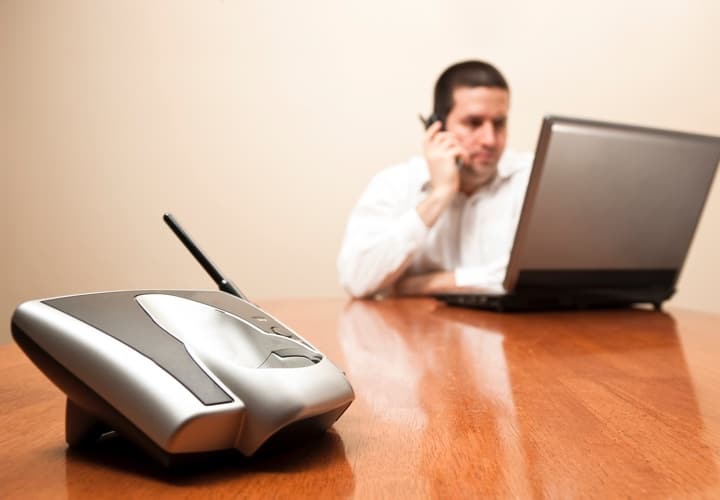
To pass a phone interview for a job, prepare as you would for an in-person interview, then plan for the phone itself. Take the call in a quiet room with your resume and notes in front of you, and speak clearly.
Below are 11 tips for before and during the call, then how to answer the phone and the questions.
In short
- A phone interview is a short first interview that employers use to decide who to invite to the next round.
- You can keep your resume, the job post and notes in front of you, because the interviewer cannot see them.
- A quiet room, a charged phone and a strong signal matter more on the phone than anywhere else.
- Your voice carries all of your energy, so smile, speak slowly and do not talk over the interviewer.
- Practice out loud with a friend before the call, so your answers come without many "ums".
What is a phone interview?
A phone interview, also called a telephone or telephonic interview or a phone screen, is a job interview held over the phone. Employers often use it early in hiring, to choose which candidates to bring in for a longer interview.
Some screening calls last only a few minutes, while others take half an hour or more. Much of the advice for an in-person interview applies on the phone too, plus the tips below.
On a cell phone, some people call it a mobile interview. The tips are the same.
How do you prepare for a phone interview?
Phone interview preparation means practicing your answers, freeing up your time and setting up a quiet place to talk. These six tips cover the hours before the call.
1. Practice for the phone interview out loud
Practice for a phone interview by doing a mock interview with a friend or family member. Saying your answers out loud makes them come more easily on the day, with fewer "ums" and "uhs".
You can also swap roles: you ask the questions, and someone who interviews well answers them. Hearing their answers can give you fresh ideas for your own.
2. Take time off for the call
Time off for a phone interview takes pressure off you, because you never know exactly how long the call will run. If you work full time, think about taking a half day or a long lunch.
Avoid squeezing the call into a short lunch break or a few minutes in your car.
3. Find a quiet space
Finding a quiet space is up to you in a phone interview, because you control the room the interviewer hears. Choose a spot away from pets, children, the TV and noisy machines such as a washing machine.
Home is usually best. If you cannot get home, a private office or a parked car will do.
4. Use a phone with a strong signal and a full battery
A phone interview on a cell phone needs a strong signal and a full battery. A dropped call or a dead phone in the middle of the interview is hard to recover from.
Test the signal in the room you will use. If it is weak, use a landline or move to a spot where calls stay clear.
5. Get a glass of water ready
A glass of water poured before the interview saves you from getting up during it. You will talk a lot, and a small sip while the interviewer speaks is fine.
Avoid eating or chewing gum on the call. If you need a longer drink, mute your phone, and unmute it before you speak again.
6. Keep your resume and notes in front of you
Notes are allowed in a phone interview, since the interviewer cannot see them. Before the call, research the company, then lay out what you need:
- Your resume, as sent with your application.
- The job post.
- Your application or cover letter.
- A page of notes: examples to mention and questions to ask.
- The company's website, open on a screen.
Print these if you can, so you still have them if your internet or power goes out.
If your resume is in Resumonk, open the Preview & Download view. Choose PDF from the Download menu to save a copy you can print.
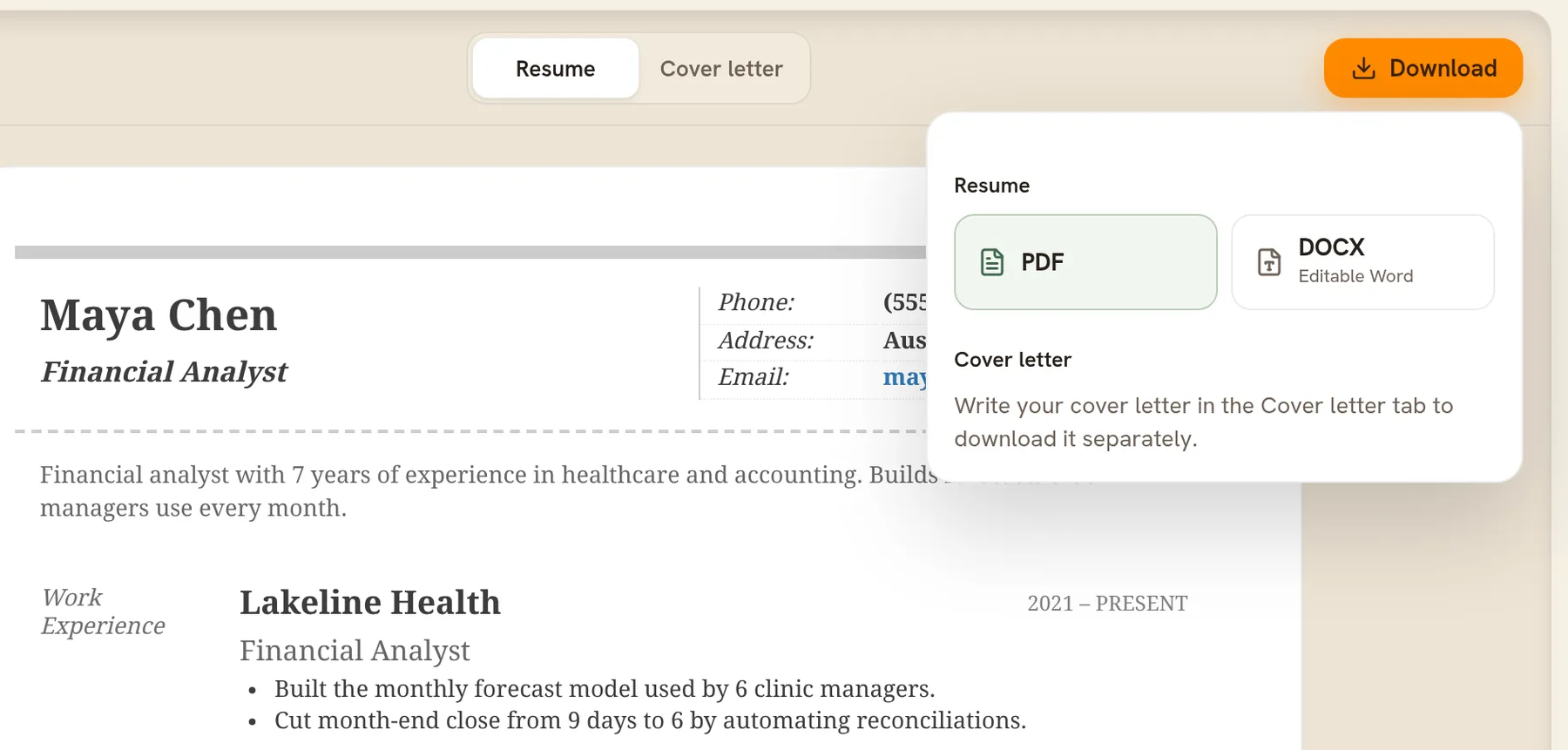
Keep your resume in front of youDownload a PDF from Resumonk and have it open during the call.
Build your resume
How do you answer the phone for an interview?
Answer the phone professionally for an interview, with a greeting and your full name. The caller then knows they have the right person. For example: "Hello, this is Daniel Ortiz."
Be in your quiet spot five minutes before the agreed time. If you are the one who calls, call on time, and start by thanking the interviewer for making time to talk.
How do you succeed during a phone interview?
Success during a phone interview comes down to how you sound and how you listen. These five tips cover the call itself.
7. Keep a smile on your face
Smiling during a phone interview makes you sound friendlier, even though nobody can see it. On the phone, your voice has to carry the interest and energy your face would show in person.
8. Take notes with pen and paper
Notes in a phone interview are best taken with pen and paper. Typing can be heard, and it can sound as if you are doing something else.
Write down names, details about the role and points you want to come back to.
9. Do not interrupt the interviewer
Interrupting is easy on the phone, because you cannot see when the other person is about to speak. Wait until the interviewer has finished before you answer or ask a question.
If you talk over each other by accident, say sorry and let them finish. Everyone understands a slip; a habit of it sounds rude.
10. Take a moment to think before you answer
A short pause before an answer is fine in a phone interview. Let the interviewer know you heard the question, for example with "Let me think about that for a second."
This tells them you are still on the line. Keep the pause short, so the silence does not drag.
11. Be honest about problems on the call
A problem during a phone interview, such as a child walking in or a sudden emergency, is better named than hidden. Tell the interviewer what is going on; most will give you a moment to deal with it.
Ignore text messages, emails and any other alerts. Half your attention is worse than a short, honest pause.
How do you answer phone interview questions?
Answer phone interview questions in short, clear answers, then stop and let the interviewer ask more. Without body language, long answers are harder to follow on the phone.
- Speak slowly: phone lines blur fast speech.
- Use an example: back up each claim with one thing you did, and its result.
- Glance at your notes: but do not read whole answers from a page, because it can be heard.
- Ask your own questions: have two or three ready for the end, about the role and the next steps.
Phone screens often ask why you want the job, to tell them about yourself, and what salary you expect. Practice those first. Our list of common interview questions and answers has sample answers for each.
How do you end a phone interview?
End a phone interview by asking what the next steps are and thanking the interviewer for their time. Say you look forward to hearing from them. Then send a short thank-you email the same day or the next morning.
Common questions about phone interviews
How long does a phone interview last?
A phone interview at the start of hiring may last only a few minutes, and many take about half an hour. Keep more time free than you expect to need.
Is a cell phone fine for a phone interview?
A cell phone is fine for a phone interview if the signal is strong and the battery is full. Test the call quality in your quiet spot beforehand.
What should you not do in a phone interview?
In a phone interview, do not eat, chew gum, type on a keyboard or check messages. Do not take the call somewhere noisy, such as a café or a moving car.
What if you miss the interviewer's call?
If you miss an interviewer's call, call or email them back as soon as you can. Say sorry and offer a few times that suit you. Keep your voicemail greeting plain in case they leave a message.
How do you conduct a phone interview as an employer?
To conduct a phone interview, tell the candidate who will call, when, and for how long. Ask every candidate the same main questions, leave time for theirs, and end by saying what happens next.
Keep reading
- 35 Most Common Interview Questions and How to Answer Them
- How to Decline a Job Offer Professionally (Without Burning Bridges)
- How to Write the Perfect Thank-You Email After an Interview
- How to Answer - "Walk Me Through Your Resume"
Next step: browse remote jobs.
job hunting.
Resumonk polishes your resume, discovers matching jobs and finds connections inside companies.
Get started free- Indeed
- Greenhouse
- + more
This article was originally published on our blog on Apr 03 2017 and authored by Sarah Landrum. It was edited and republished in its present form by Team Resumonk on Sep 15 2025.