Is it important to have a LinkedIn profile?
A LinkedIn profile is important for most office, professional and technical jobs, because recruiters search LinkedIn for candidates and check applicants. A profile is not required, though: many employers hire without ever looking at one, and a good resume still gets the job.
Below is what a profile does for you, who can skip it, and how to set up a basic one.
In short
- A LinkedIn profile is not required to get a job, but it helps in most office, professional and technical fields.
- Recruiters search LinkedIn for candidates and often check the profiles of people who apply.
- A LinkedIn profile lets former colleagues, classmates and recruiters find you and contact you.
- People in trades, retail, hospitality and local businesses are often hired without one.
- A basic LinkedIn profile is free and needs only a photo, a headline, your experience and your education.
Why is it important to have a LinkedIn profile?
A LinkedIn profile is important because it puts your work history where recruiters and contacts look for it. A profile has five main benefits:
- Recruiters can find you. Recruiters search LinkedIn by job title, skill and location, for full-time roles and freelance work alike.
- Job listings. LinkedIn has its own job listings, and you can follow the companies you want to work for.
- Networking. LinkedIn helps you stay in touch with past colleagues and meet people in your field. See our guide on how to network your way to a new job.
- A public record of your career. A profile shows more than a resume can: posts, recommendations and the full list of your jobs.
- Learning and news. LinkedIn Learning offers courses in many fields and skills, and your feed shows news from your industry.
Is it necessary to have LinkedIn to get a job?
A LinkedIn profile is not necessary to get a job. Most employers still hire from a resume and an interview, and many never look at a profile.
A LinkedIn profile helps most in these fields:
- Office, technology, finance, marketing and sales jobs.
- Recruiting, consulting and other work built on contacts.
- Freelance and contract work, where clients look you up before they hire.
- Students and new graduates seeking internships or a first job.
People in trades, retail, hospitality, healthcare support and small local businesses are often hired without one. If your field hires that way, a profile is a bonus, not a must.
What happens if you do not have a LinkedIn profile?
Without a LinkedIn profile, you can still apply anywhere, but you lose the chances that come through LinkedIn itself:
- Recruiters who search LinkedIn for people like you will not find you.
- An employer who looks you up after reading your resume finds nothing to confirm it.
- Jobs shared in posts by people you know will not reach you.
- Your network grows only through the people you meet in person.
Whether to apply with your profile or your resume is a separate question. Our comparison of applying with a resume or a LinkedIn profile answers it.
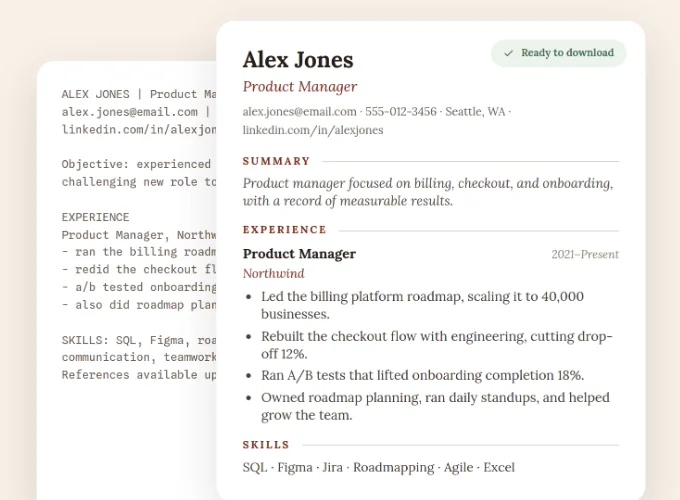
If you already have a profile, Resumonk can start a resume from your public LinkedIn address, in one of its resume templates. Your email, phone and skills do not come across, so you type them in afterwards.
Start from the profile you already haveResumonk can start a resume from your LinkedIn profile link, so you do not type it twice.
Build your resume
Is LinkedIn only for job seekers or senior people?
LinkedIn is not only for job seekers or senior people. Three common beliefs about it are wrong:
- "It is only for job hunting." People also use it to share their work, discuss their field, find partners and sell services.
- "It is only for managers." Students, new graduates and people at every level have profiles.
- "It takes too much time." Daily activity is not needed. A few minutes a week, liking and commenting on posts, keeps a profile alive.
How do you set up a LinkedIn profile as a beginner?
A LinkedIn profile is set up in five steps, and a basic one is free:
- Create an account with the email address you use for job applications.
- Add a clear, friendly photo of your face and a short headline, such as "Junior accountant | Excel and bookkeeping".
- Fill in your experience and education, using the same job titles and dates as your resume.
- Connect with colleagues, classmates and people in your field.
- Share or comment on a post now and then, and add new achievements as they happen.
For the details of each part, from the headline to the About section, see our tips for a better LinkedIn profile.
Common questions about having a LinkedIn profile
What is a LinkedIn profile?
A LinkedIn profile is your page on LinkedIn, the professional network. It shows your photo, headline, jobs, education and skills. Anyone can find it through LinkedIn or a search engine, unless you limit who sees it.
Is LinkedIn worth it when you are not job hunting?
A LinkedIn profile is worth keeping even when you are not job hunting. Recruiters may contact you with offers, and your contacts are already in place when you do start looking.
Is LinkedIn free?
LinkedIn is free to join, and a basic profile, job search and messages to your connections cost nothing. LinkedIn Premium is a paid plan with extra features, and you do not need it to have a good profile.
What are the pros and cons of LinkedIn?
The pros of LinkedIn are that recruiters can find you, contacts can reach you and your career is on public record. The cons are the time a profile takes to keep current and the personal details it makes public.
Keep reading
- Should You Apply to Jobs Using Your Resume or LinkedIn Profile?
- 9 Tips to Make Your LinkedIn Profile Stand Out
Next step: turn your LinkedIn profile into a resume.
job hunting.
Resumonk polishes your resume, discovers matching jobs and finds connections inside companies.
Get started free- Indeed
- Greenhouse
- + more
This article was originally published on our blog on Aug 29 2023 and authored by Manjeet Kaur. It was edited and republished in its present form by Team Resumonk on Sep 15 2025.