How to Network Your Way to a New Job

To network your way to a new job, tell people you know what job you want. Then ask each one for one specific thing, such as advice or an introduction. Start with those who know your work best, like former managers and references, then reach out to friends, family and classmates.
Below are the steps in order, a message you can adapt and how to follow up.
In short
- Your network includes everyone you know, not only former bosses and coworkers.
- Decide what job you want before you contact anyone, so you can say it in one sentence.
- Your references are the best first contacts, because they already know your work.
- A small, specific request, such as one introduction, gets more help than "Do you know of any jobs?"
- A contact who does not reply has often just missed the message, so a polite follow-up a week later is fine.
- Thank every contact who helps, and keep in touch after you have the job.
Who is in your network when you look for a job?
Your job search network is everyone you know, personally or through work. Former managers and coworkers are the obvious start, but they are not the only people who can help.
Make a list that includes:
- People from past jobs, internships and volunteer work.
- Friends, family members and friends of friends.
- Classmates and teachers from high school or college.
- Connections on LinkedIn and other social media.
- People you know from clubs, sports, a place of worship or your neighborhood.
Do not rule someone out because the relationship is not strictly professional. A cousin or a former teammate may know someone at the company you want to join. They may be glad to introduce you.
What should you know before you reach out?
Before you reach out to your network, know what kind of job you want and why you fit it. A contact can only help with a goal they understand.
Write down, in a sentence or two:
- The job title or kind of work you want.
- The industry and the location, or whether you want remote work.
- Why you are qualified, in one line.
- What you will ask each person for.
The right request depends on the person. A senior contact at a company may be able to ask a hiring manager to look at your resume.
A peer at the same company can more often pass along a name or tell you how the team hires. Keep each request reasonable for the person you ask.
Should you start with your references?
Your references are the best place to start networking, because they already know your skills and have agreed to speak for you. They are more likely to help, and if they cannot, they may know someone who can.
When you contact a reference:
- Tell them you are looking for a new job.
- Say the kind of job, the industry and the location you want.
- Ask whether they know anyone you should talk to.
- Check that they are still willing to be a reference, and warn them that a hiring manager may call.
After your references, move on to people who know you well, and only then to people you have met once or twice.
How do you ask for help without being pushy?
Asking for help without being pushy starts with the relationship, not the job. Most people like to help, but few will respond well to someone who acts as if the help is owed.
Match your request to how well you know the person:
- Someone you met once or twice: ask a short question or for advice, such as how they got into their field.
- A former coworker or classmate: ask what their company is like to work for, or whether their team is hiring.
- A close friend or relative: ask whether they would pass your resume to the hiring manager at their company.
Do not ask a near stranger to hire you or to recommend you. They do not know your work yet, so they cannot vouch for it.
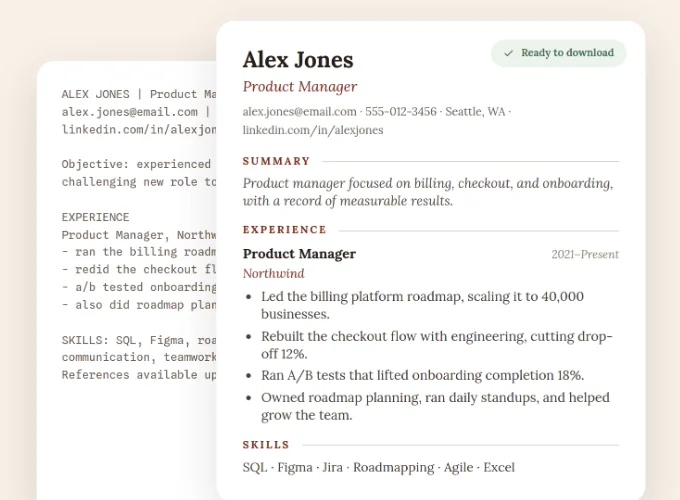
Have a resume ready to shareWhen a contact asks for it, download a current PDF from Resumonk and send it.
Build your resume
How do you make a specific request?
A specific request names the one thing you would like the contact to do. "Let me know if you hear of anything" leaves all the work to them, and busy people rarely act on it.
Good specific requests include:
- An introduction to the hiring manager or someone on the team.
- A 20-minute call about how their company hires.
- Advice on one application you are about to send.
- A referral for a job you have found posted at their company.
A short message that says who you are, what you want and what you are asking for works best. Here is an example to adapt:
- Hi Priya, I hope the new role at Corvane Logistics is going well. I am looking for a job in supply chain planning in the Denver area, after four years at a regional distributor. I saw that Corvane has a planning analyst opening. Would you be willing to introduce me to the hiring manager, or tell me who that is? I have attached my resume. Thank you either way. Daniel
Be clear and direct, and polite. Do not leave the contact to guess why you got in touch.
How do you follow up when a contact does not reply?
When a contact does not reply, wait about a week and send one short, polite follow-up. They may have been busy or missed your message, so do not take silence as a no.
- Keep the follow-up to two or three sentences, and repeat your one request.
- If there is still no reply, let it go and try someone else.
- Do not send several messages in a row or contact them through every channel at once.
Networking takes time. If you expect a contact to find you a job right away, you will likely be disappointed.
How do you keep the connection going?
Keeping a connection going means staying in touch whether or not the person could help. If they say they do not know of anything, thank them for their time.
- Ask them to think of you if they hear of a job that fits.
- Tell them how it went if they gave you an introduction or advice.
- Offer help in return, now or later.
- Send a short note now and then, not only when you need something.
Your network can get you an introduction or a referral, but it will not do the job search for you. You still apply, interview and win the offer yourself.
Common questions about networking for a job
Can you really get a job through connections?
Getting a job through connections is common, because a referral from someone an employer trusts can get your resume read sooner. A connection can open a conversation, but you still have to be a good fit for the job.
How do you network if you know no one in your field?
To network without contacts in your field, start with people who know people: friends, family, former classmates and teachers. Ask each whether they know anyone in the field who would talk to you, and join groups or events for that field.
What is an informational interview?
An informational interview is a short talk with someone in a job or company that interests you, to learn about their work. You ask questions and listen; you do not ask for a job in it.
How do you ask a friend for a job referral?
Ask a friend for a referral by naming the exact job posting and sending your resume with it. Make it easy to say no, and thank them whatever the answer.
Should you network on LinkedIn?
LinkedIn is a good place to network for a job, because it shows who you know at each company. Keep your profile current, and add a short personal note when you send a connection request.
Keep reading
- 17 Best Work From Home Jobs (And Where To Find Them)
- 8 Best Career Assessment and Personality Tests to Help You Find the Right Job
- What is a Virtual Internship And Why You Should Consider Doing One
- The 12-Step Plan to a Successful Career Change
Next step: browse remote jobs.
job hunting.
Resumonk polishes your resume, discovers matching jobs and finds connections inside companies.
Get started free- Indeed
- Greenhouse
- + more
This article was originally published on our blog on Mar 08 2018 and authored by Sarah Landrum. It was edited and republished in its present form by Team Resumonk on Sep 15 2025.