Physical Therapist Resume Example (with Tips and Best Practices)
Introduction
Come, let's explore a scenario - you've just finished a grueling day at the clinic.
Your hands ache from manual therapy sessions, your documentation is finally complete, and somewhere between helping Mrs. Johnson regain her balance after that hip replacement and coaching Tommy through his ACL rehab exercises, it hits you. It's time to move on. Maybe you're seeking better work-life balance, perhaps you're ready to specialize in that niche area that's always fascinated you, or you're simply ready for a new challenge in a different clinical setting. Now you're staring at your laptop screen, wondering how to capture years of patient transformations, clinical expertise, and that indescribable satisfaction of helping someone walk again - all in a two-page document.
As a Physical Therapist, your resume isn't just a list of jobs and degrees. It's a reflection of every patient whose life you've touched, every evidence-based technique you've mastered, and every collaborative care plan you've contributed to. Whether you're a fresh graduate still buzzing from passing the NPTE or a seasoned PT with decades of experience across multiple specialties, crafting the perfect resume requires a strategic approach that speaks to both the clinical excellence and compassionate care that define your profession.
Creating a compelling Physical Therapist resume means understanding exactly what hiring managers - whether they're clinic directors juggling staffing needs or healthcare administrators focused on outcomes - are looking for. You need to showcase not just your ability to perform therapeutic interventions, but your capacity to connect with patients, collaborate with interdisciplinary teams, and contribute to the business side of healthcare delivery. It's about demonstrating that you can handle a full caseload while maintaining quality care, that you stay current with evidence-based practices, and that you bring something unique to their specific clinical environment.
In this comprehensive guide, we'll walk you through every element of creating a standout Physical Therapist resume. We'll start with choosing the right format that showcases your clinical progression, then dive deep into crafting compelling work experience descriptions that go beyond generic duties. You'll learn how to strategically present your education and continuing education, highlight the technical and soft skills that matter most, and navigate special considerations unique to the PT profession - from handling state licensure requirements to addressing different practice settings. We'll also cover how to incorporate awards and research contributions, craft a cover letter that complements your resume, and manage your professional references strategically. By the end, you'll have everything you need to create a resume that truly captures your journey as a movement specialist and patient advocate.
The Ultimate Physical Therapist Resume Example/Sample
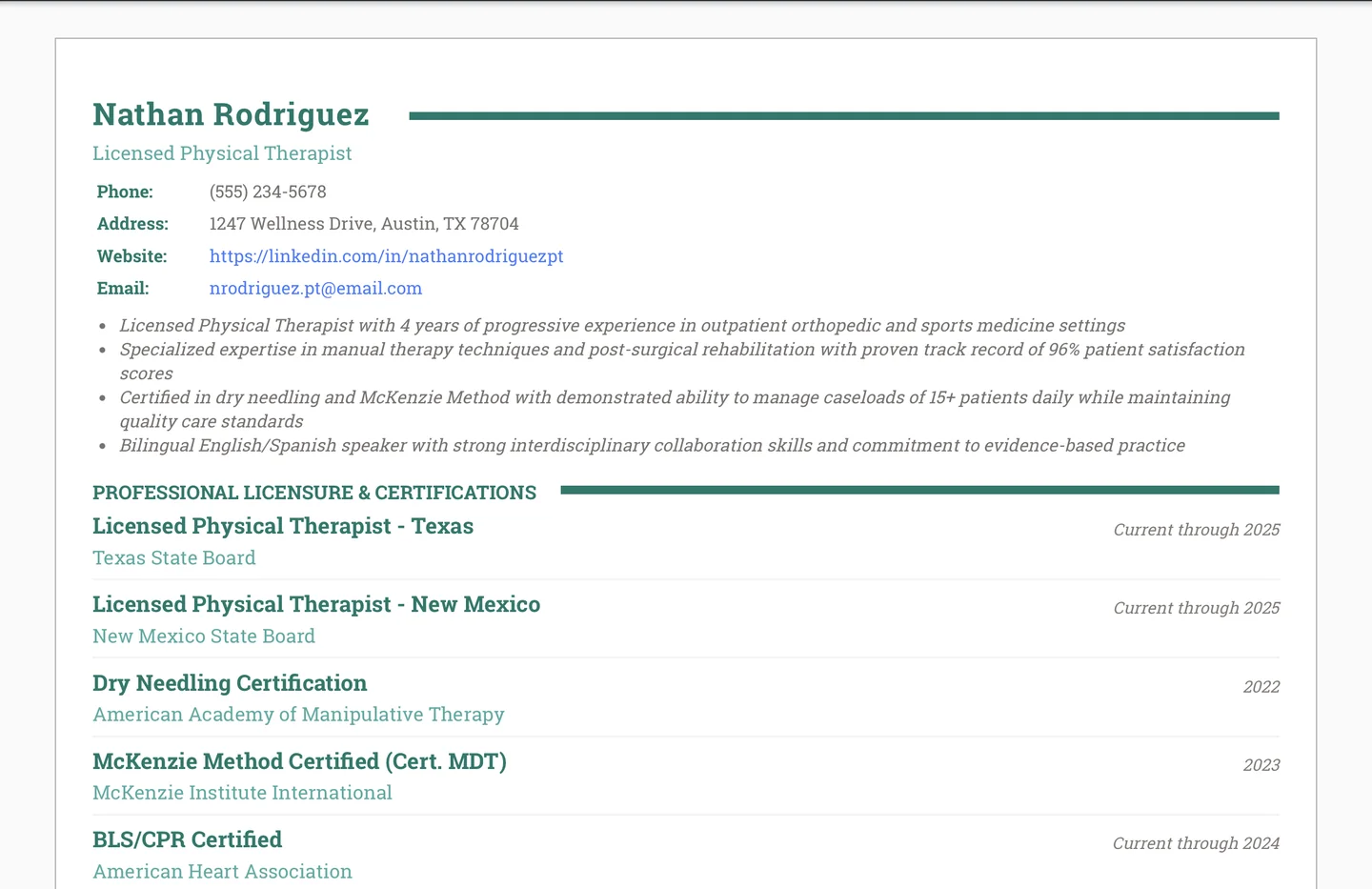
https://www.resumonk.com/physical-therapistPhysical TherapistResume Format for Physical Therapist Resume
The reverse-chronological format is your golden ticket here.
As a Physical Therapist, whether you're fresh out of school or a seasoned professional looking for your next opportunity, this format showcases your clinical progression beautifully. It tells the story of your professional journey backward - starting with where you are now and working back through the experiences that shaped you into the therapist you've become.
Structure Your Physical Therapist Resume Strategically
Start with your contact information and professional summary at the top.
Your summary should be a 3-4 line narrative that captures your specialization area (if you have one), years of experience, and what makes you unique as a PT. Think of it as your elevator pitch to a hiring manager who's reviewing dozens of resumes between patient evaluations.
Next comes your licenses and certifications section - and yes, this comes before experience for Physical Therapists. Your state license number, NPTE completion, and any specialized certifications like Orthopedic Clinical Specialist (OCS) or Neurologic Clinical Specialist (NCS) need to be front and center. In the UK, you'd highlight your HCPC registration, while Canadian PTs would showcase their provincial college registration prominently.
The Flow That Makes Sense
After credentials, dive into your professional experience, then education, followed by clinical rotations (if you're a recent graduate), and finally your skills section. This flow mirrors how hiring managers in healthcare settings evaluate candidates - they need to know you're legally qualified to practice before they care about anything else.
For those transitioning from Physical Therapist Assistant roles or coming from related fields like athletic training, the reverse-chronological format still works wonderfully. It demonstrates your career progression and shows how each role has prepared you for the responsibilities of a licensed Physical Therapist.
Remember, rehabilitation directors and clinic managers are looking for evidence of growth and increasing responsibility in your career trajectory.
Work Experience on Physical Therapist Resume
You know that feeling when a patient finally achieves a breakthrough - maybe it's their first unassisted step after a stroke, or successfully climbing stairs post-knee replacement? Your work experience section needs to capture these victories, but in a way that speaks to metrics-driven healthcare administrators while still honoring the human element of your work.
Quantify Your Clinical Impact
Each position should start with your job title, facility name, location, and dates of employment.
But here's where many Physical Therapists stumble - they list duties instead of achievements. You didn't just "provide patient care" - you transformed lives through evidence-based interventions.
❌ Don't write generic job descriptions:
• Treated patients with various conditions
• Documented patient progress
• Collaborated with healthcare team
✅ Do showcase measurable outcomes and specific achievements:
• Managed caseload of 12-15 patients daily, achieving 94% patient satisfaction scores
• Implemented innovative aquatic therapy program that reduced average recovery time by 3 weeks for post-surgical hip replacement patients
• Developed specialized balance training protocol adopted facility-wide, resulting in 40% reduction in fall incidents among geriatric patients
Tell Your Professional Story Through Different Settings
Whether you've worked in acute care hospitals, outpatient clinics, skilled nursing facilities, or home health settings, each environment tells a different part of your story. In acute care, emphasize your ability to handle medically complex patients and work under pressure.
For outpatient experience, highlight your long-term treatment planning and patient education skills.
Recent graduates without extensive PT experience should leverage their clinical rotations and any related healthcare experience. That part-time job as a rehabilitation aide? It demonstrates your commitment to the field. Your volunteer work at the adaptive sports program? It shows your understanding of functional mobility beyond the clinic walls.
Demonstrate Leadership Without the Title
Physical Therapy is unique in that you often lead without formal authority - coordinating with physicians, directing PTAs, and educating families. Capture these leadership moments. Did you mentor PT students during their clinical rotations? Were you the go-to therapist for complex neurological cases?
These details matter immensely to potential employers looking for someone who can grow with their organization.
For those in specialized areas like pediatrics, sports medicine, or geriatrics, your experience descriptions should reflect the unique challenges and rewards of your niche. A pediatric PT might emphasize family education and developmental milestone achievements, while a sports medicine specialist would highlight return-to-play protocols and injury prevention programs.
Skills to Include on Physical Therapist Resume
Remember your first day of PT school when you learned about manual muscle testing, only to discover years later that the real skill was reading the subtle grimace on your patient's face that told you more than any formal assessment ever could? Your skills section needs to bridge this gap between technical expertise and the intuitive abilities you've developed through thousands of patient interactions.
Technical Skills That Set You Apart
Start with the hard skills that are non-negotiable in your field.
Manual therapy techniques, gait analysis, therapeutic exercise prescription - these are your bread and butter. But go beyond the basics. If you're certified in dry needling, trained in the Graston Technique, or skilled in vestibular rehabilitation, these specialized competencies make you stand out in a sea of generalists.
List your proficiency with specific equipment and modalities. Can you operate an AlterG anti-gravity treadmill? Are you experienced with TENS units, ultrasound therapy, or laser therapy? In today's technology-driven healthcare environment, familiarity with EMR systems like WebPT or TherabillPT is increasingly valuable.
Australian PTs might emphasize experience with local systems like Cliniko or Power Diary.
The Soft Skills That Matter in Rehabilitation
Physical Therapy is where science meets compassion, and your soft skills section should reflect this beautiful intersection. Patient motivation isn't just a buzzword - it's the difference between a successful recovery and a patient who gives up.
Your ability to communicate complex medical information in accessible terms, your cultural sensitivity when working with diverse populations, and your emotional resilience when dealing with patients facing life-altering injuries - these are the skills that make you more than just a movement expert.
❌ Don't list vague, overused skills:
Skills: Communication, Teamwork, Problem-solving, Time management
✅ Do provide specific, relevant skills with context:
Clinical Skills:
• Manual Therapy: Certified in Mulligan Concept and McKenzie Method
• Specialized Populations: LSVT BIG certified for Parkinson's disease management
• Modalities: Proficient in dry needling (certified in 3 states), cupping therapy, and kinesiology taping

Interpersonal Skills:
• Patient Education: Developed visual exercise guides improving home program compliance by 60%
• Interdisciplinary Collaboration: Regular co-treatment sessions with OT and SLP for complex neurological cases
• Cultural Competency: Fluent in Spanish, ASL proficient, experienced with interpreter services
Emerging Skills in Modern Physical Therapy
The field is evolving rapidly, and showcasing contemporary skills demonstrates you're not stuck in outdated practices.
Telehealth competency has become crucial post-2020. Experience with movement analysis apps, virtual reality rehabilitation systems, or biofeedback technology shows you're embracing innovation.
Knowledge of pain neuroscience education, understanding of psychosocial factors in rehabilitation, and familiarity with wellness and prevention programs position you as a forward-thinking practitioner.
Specific Considerations and Tips for Physical Therapist Resume
Here's something they don't teach in PT school - the hiring manager reviewing your resume might be a clinic director juggling 47 other responsibilities, squeezing in resume reviews between Medicare documentation audits and staff meetings. Or it could be a non-clinical HR professional who doesn't know the difference between PNF and PRE.
Your resume needs to speak to both audiences simultaneously.
Navigate the Licensure Landscape
Unlike many professions, Physical Therapy has strict geographical boundaries.
Your license to practice in New York doesn't automatically make you eligible to work in New Jersey, despite being able to see the Manhattan skyline from Newark. Be crystal clear about your licensure status. If you're licensed in multiple states, list them all. If you're in the process of obtaining licensure through endorsement, state that explicitly with expected completion dates. For new graduates awaiting NPTE results, include your test date and temporary license number if applicable.
International Physical Therapists face unique challenges. If you're a Canadian PT looking to work in the US, or a US-trained therapist considering opportunities in Australia, your resume needs to address credential equivalency upfront. Include your FCCPT Type I certificate status, TOEFL scores if applicable, and any bridging program completions.
The Clinical Rotation Dilemma for New Graduates
Fresh graduates often wonder whether to include all their clinical rotations or cherry-pick the best ones. Here's the truth - quality beats quantity. Instead of listing all eight rotations in mundane detail, choose 3-4 that align with your target position. Applying for an outpatient orthopedic role? That sports medicine rotation at the Division I university athletic department deserves spotlight treatment. Seeking a pediatric position?
Your experience at the children's developmental center needs to shine.
Format these thoughtfully. Each rotation should include the setting type, patient population, and specific experiences that prepared you for independent practice.
Mention any special projects, in-services you delivered, or unique cases you managed under supervision.
The Productivity Paradox
Here's an uncomfortable truth about modern Physical Therapy - productivity requirements often clash with quality care ideals. While you might philosophically oppose the "treat 'em and street 'em" mentality, employers need to know you can handle the pace. Include metrics that demonstrate efficiency without sacrificing care quality.
Mention your average daily patient volume, but balance it with quality indicators like patient satisfaction scores, functional outcome improvements, or reduced readmission rates.
Address Career Gaps and Transitions Strategically
Maybe you took time off to care for family, pursued travel therapy assignments, or tried your hand at cash-based practice before returning to traditional employment.
These aren't red flags if presented correctly. Travel therapists should emphasize their adaptability and diverse clinical exposure. Those returning from private practice can highlight their business acumen and understanding of the financial aspects of healthcare delivery.
If you're transitioning from acute care to outpatient, or from pediatrics to geriatrics, your resume should tell a coherent story about why this change makes sense for your career trajectory. Draw connections between seemingly disparate experiences - that pediatric background gives you unique insights into family dynamics that benefit geriatric care where family involvement is crucial.
The Continuing Education Balance
Physical Therapists are lifelong learners by necessity, but your resume isn't a continuing education transcript.
Select courses and certifications that directly support your career objectives. Pursuing a lymphedema management position? Your CLT certification belongs in the spotlight. Interested in workplace ergonomics? That OSHA certification and industrial rehabilitation coursework deserve prominence. Weekend courses on general topics can be summarized as "30+ hours of continuing education in orthopedic manual therapy" rather than listing each workshop individually.
Remember, in countries like the UK or Australia where the professional development requirements differ, adjust your presentation accordingly. UK physiotherapists might emphasize CPD hours and portfolio development, while Australian physios could highlight their participation in the PRF program or clinical specialization pathways.
Education Requirements for Physical Therapist Resume
So you've spent years buried in anatomy textbooks, memorizing muscle insertions and nerve pathways, and now you're ready to translate all that academic sweat into a compelling education section on your resume.
As a Physical Therapist, your educational journey isn't just a formality - it's the foundation that legally allows you to practice. Unlike many professions where education is a nice-to-have, for PTs, it's absolutely non-negotiable.
The Doctor of Physical Therapy (DPT) - Your Crown Jewel
Let's address the elephant in the treatment room - your DPT degree is the star of your education section.
This isn't like listing a bachelor's degree where you can be casual about it. Your doctoral education represents three grueling years of clinical rotations, research projects, and enough practical exams to make anyone's head spin. When listing your DPT, include your graduation date (or expected graduation if you're still completing it), the full name of your institution, and yes, spell out "Doctor of Physical Therapy" at least once before using the abbreviation.
Here's where many new grads stumble - they either oversell or undersell their educational achievements. You want to find that sweet spot:
❌ Don't write vaguely:
DPT - State University (2023)
✅ Do write with appropriate detail:
Doctor of Physical Therapy (DPT)
University of Southern California | Los Angeles, CA
Graduated: May 2023
CAPTE Accredited Program
GPA: 3.8/4.0 (if 3.5 or higher)
Your Undergraduate Foundation - Still Matters
Remember that bachelor's degree you earned before diving into PT school?
The one in kinesiology, exercise science, or biology? It still counts, especially for entry-level positions where employers want to see your complete academic trajectory. This shows your long-term commitment to the field - you didn't just wake up one day and decide to become a PT; you've been building toward this for years.
List your undergraduate degree below your DPT, but keep it concise. Include relevant coursework only if you're a new graduate with limited clinical experience.
Once you've been practicing for a few years, that list of undergraduate courses becomes less relevant than your hands-on patient care experience.
Certifications and Continuing Education - The Ongoing Journey
Physical therapy is a field that never stops evolving, and neither should your education section. Your state licensure should be prominently displayed (and for international readers, remember that Canadian provinces have different licensing bodies than US states, while UK physiotherapists register with the HCPC, and Australian physiotherapists with AHPRA).
Beyond basic licensure, specialized certifications can set you apart. Whether it's your Orthopedic Clinical Specialist (OCS) certification, dry needling certification, or that weekend course on the McKenzie Method, these show you're invested in expanding your skill set.
List them in order of relevance to the position you're applying for, not necessarily chronologically.
❌ Don't create a cluttered list:
CPR certified, took a weekend course on cupping, thinking about getting OCS,
licensed in California, attended a conference in 2019
✅ Do organize strategically:
Professional Licensure & Certifications:
• Licensed Physical Therapist - California (License #PT12345)
• Board Certified Orthopedic Clinical Specialist (OCS) - 2022
• Dry Needling Certification - American Academy of Manipulative Therapy, 2021
• BLS/CPR Certified - Current through 2024
Clinical Rotations for New Graduates
If you're fresh out of PT school, your clinical rotations are pure gold.
These weren't just observational experiences - you were treating real patients under supervision, making clinical decisions, and developing your professional identity. Include 2-3 most relevant rotations, especially those that align with the job you're seeking. An outpatient orthopedic clinic won't care much about your rotation in the NICU, but they'll definitely want to know about your sports medicine placement.
Format these rotations as mini-experiences within your education section, highlighting the setting, patient population, and any special projects or presentations you completed. This bridges the gap between your education and experience sections beautifully.
Awards and Publications on Physical Therapist Resume
Let's step into this scene - you're reviewing patient charts at 7 AM, and you remember that research poster you presented at the APTA conference last year. Or that academic excellence award gathering dust on your shelf. These aren't just ego boosters; they're professional differentiators that show you go beyond the minimum requirements of patient care.
In a field where evidence-based practice is king, your contributions to the body of knowledge matter immensely.
Academic Awards - More Than Just Gold Stars
Those Dean's List mentions and summa cum laude honors aren't just Latin phrases to impress your relatives. They demonstrate your ability to master complex material - the same dedication you'll bring to understanding each patient's unique biomechanical puzzle.
Recent graduates, this is especially crucial for you since your clinical experience might be limited to rotations and internships.
However, there's a shelf life to academic awards. If you graduated five years ago, that "Outstanding Student Clinician" award carries less weight than your recent professional achievements. The rule of thumb?
Academic awards are most relevant within the first 2-3 years post-graduation, unless they're particularly prestigious or directly relevant to your target position.
❌ Don't list every minor recognition:
Awards:
- Made Dean's List once in sophomore year
- Perfect attendance award in PT school
- Nominated for an award (didn't win)
- High school valedictorian
✅ Do highlight meaningful achievements:
Professional Recognition:
• Excellence in Clinical Research Award - American Physical Therapy Association, 2023
• Summa Cum Laude Graduate - Doctor of Physical Therapy Program, 2022
• Outstanding Student Clinician Award - Orthopedic Rotation, 2021
Research and Publications - Your Scientific Contribution
Whether you've published in the Journal of Orthopedic & Sports Physical Therapy or presented a case study at your state conference, these contributions position you as a thinking clinician, not just a protocol follower. In our evidence-based profession, showing that you can critically evaluate and contribute to research sets you apart from the PT who hasn't opened a journal since graduation.
Format your publications using a modified citation style - enough detail to be found if someone wants to look them up, but not so much that it overwhelms the reader. Include peer-reviewed publications first, followed by conference presentations, then any contributing author roles or research assistant positions.
Professional Presentations and Speaking Engagements
That in-service presentation you gave on shoulder impingement?
The community education talk about fall prevention at the senior center? These demonstrate leadership and communication skills that translate directly to patient education - a core competency in physical therapy. Even if you're not gunning for a teaching position, showing that you can distill complex information for various audiences is valuable.
For those applying to positions in the UK or Australia, note that community engagement and public health education are often more emphasized in job descriptions, making these presentations particularly relevant. In contrast, US positions might value conference presentations more highly, especially in academic medical centers.
❌ Don't undersell your contributions:
Gave a talk about back pain once
✅ Do provide context and impact:
Professional Presentations:
• "Modern Approaches to Chronic Low Back Pain Management" - Invited Speaker
 Regional PT Symposium, Portland, OR (Audience: 150+ clinicians) - March 2023
• "Injury Prevention in Youth Athletes" - Community Education Series
 YMCA of Greater Boston (Delivered to 200+ parents and coaches) - 2022
When to Create a Separate Section vs. Integrating
If you have more than three significant awards or publications, they deserve their own section. Otherwise, you might integrate them into your education or experience sections where relevant.
A new grad with one publication might list it under their DPT program details, while a PT with multiple publications and conference presentations should showcase them prominently in a dedicated section.
Strategic Reference Listing for Physical Therapist Resume
You know that moment when a patient asks if you can help with their specific condition, and you confidently say yes because you have the skills and experience? Your references are the professional colleagues who will back up that confidence when the hiring manager calls.
In physical therapy, where your clinical judgment and hands-on skills can't be fully captured on paper, references become your professional validators.
Choosing Your Clinical Champions
Your reference lineup should read like a well-balanced treatment team. Ideally, include a current or recent supervisor who can speak to your clinical skills, a PT colleague who has observed your patient interactions, and potentially a physician or other healthcare professional who can attest to your interdisciplinary collaboration skills.
For new graduates, your clinical instructors from rotations are gold - they've seen you progress from nervous student to confident clinician.
Avoid the temptation to list your PT school professor who taught you anatomy but never saw you treat a patient. Similarly, while your current patients might love you, patient references are generally inappropriate for healthcare positions unless specifically requested (some pediatric or home health positions might be exceptions).
The Reference Request Conversation
Approaching potential references requires the same careful communication you use when explaining a treatment plan to a skeptical patient. Don't just send a quick text asking, "Can you be my reference?"
Instead, have a proper conversation about the position you're pursuing, why you're interested, and what aspects of your work together you'd like them to emphasize.
Provide your references with context - send them the job posting, your current resume, and a brief reminder of your key accomplishments during your time working together. That complex total knee patient whose range of motion you restored? Remind them. The staff in-service you developed on new balance assessment protocols? Jog their memory.
Make it easy for them to be specific and enthusiastic when called.
❌ Don't list references without preparation:
References:
John Smith - Former Boss - 555-1234
Jane Doe - Coworker - 555-5678
Bob Johnson - PT School Teacher - 555-9012
✅ Do provide complete, professional information:
Professional References:

Sarah Mitchell, PT, DPT, OCS
Clinical Director - Advanced Orthopedic Specialists
Relationship: Direct Supervisor (2021-2023)
Phone: (555) 234-5678
Email: [email protected]

Michael Chen, MD
Orthopedic Surgeon - Regional Medical Center
Relationship: Collaborating Physician for Post-Surgical Rehabilitation
Phone: (555) 345-6789
Email: [email protected]

Jennifer Rodriguez, PT, DPT
Senior Physical Therapist - Advanced Orthopedic Specialists
Relationship: Clinical Mentor and Team Colleague
Phone: (555) 456-7890
Email: [email protected]
The "References Available Upon Request" Debate
Here's where regional differences come into play.
In the US, it's generally acceptable to simply state "References available upon request" on your resume and provide them when asked. This saves space and protects your references' contact information from unnecessary distribution. However, some healthcare systems want references upfront as part of their credentialing process.
In the UK and Australia, it's more common to provide at least two references with your initial application. Canadian employers often fall somewhere in between, depending on whether it's a public or private position. When in doubt, follow the application instructions explicitly - if they ask for three references with your application, provide them.
If they're silent on the matter, "References available upon request" is perfectly professional.
Managing Your Reference Network
Think of your references as you would a patient's support system - they need to be kept informed and engaged. Let them know when you've submitted an application that lists them, and definitely inform them if you get the position.
A thank-you note (yes, even in our digital age) goes a long way, especially if you plan to use them as references again in the future.
If you're conducting a broad job search, be mindful of reference fatigue. Your clinical director probably doesn't want to field calls for twenty different positions. Be strategic about when you provide references - typically after an initial interview when there's genuine mutual interest.
Special Circumstances and Red Flags
What if you can't use your current supervisor because you don't want them to know you're job searching? This is common and acceptable - use a trusted colleague instead, or a supervisor from a recent previous position.
If asked why your current supervisor isn't listed, simply explain that you prefer to keep your job search confidential until you're further along in the process.
For those returning to practice after a break (maybe you took time for family or to travel), recent volunteer work supervisors or continuing education instructors can serve as references to show you've maintained your clinical edge. The key is showing continuity in your professional development, even if you haven't been in traditional practice.
Cover Letter Strategies for Physical Therapist Resume
Let's be honest - after documenting patient progress notes all day, writing about yourself feels strange. You're used to objective measurements and SOAP notes, not selling yourself on paper. But here's the thing: your cover letter is essentially a functional assessment of your professional capabilities, demonstrating why you're the right fit for this particular clinical setting.
It's your chance to connect the dots between your experience and their needs in a way your resume alone cannot.
The Opening - Beyond "I'm Applying for the PT Position"
Skip the generic opening that every hiring manager has read a thousand times. Instead, start with something that immediately establishes your understanding of their specific patient population or treatment philosophy. Did you notice they specialize in vestibular rehabilitation? Lead with your relevant experience or genuine interest in that niche. Are they a sports medicine clinic that treats the local college athletes?
Mention your background as a former athlete or your sports-specific certifications.
Your opening paragraph should make them think, "This person gets what we do here." Remember, physical therapy settings vary wildly - from pediatric developmental clinics to acute care hospitals to outpatient orthopedic practices.
Your cover letter needs to show you understand the unique demands of their specific environment.
❌ Don't write a generic opening:
Dear Hiring Manager,
I am writing to apply for the Physical Therapist position at your facility.
I have a DPT degree and am licensed in the state.
✅ Do write with specificity and engagement:
Dear Dr. Martinez,
As a Physical Therapist who has dedicated the last three years to developing evidence-based return-to-sport protocols for ACL reconstruction patients, I was thrilled to discover your opening at Elite Sports Rehabilitation. Your clinic's reputation for using force plate technology and movement analysis to guide treatment progression aligns perfectly with my clinical approach.
The Body - Telling Your Clinical Story
This is where you transform your resume bullet points into a narrative.
Pick 2-3 key experiences or achievements that directly relate to what they're looking for. If the job posting emphasizes manual therapy skills, don't just mention your certification - describe how you've used those techniques to achieve specific patient outcomes. If they want someone comfortable with a high-volume caseload, share how you managed 15-20 patients daily while maintaining quality care and documentation standards.
Use the STAR method (Situation, Task, Action, Result) subtly woven into your paragraphs. Instead of listing that you "reduced patient wait times," tell the brief story of how you recognized the bottleneck in your clinic's intake process, proposed a solution, and improved patient flow by 25% while maintaining treatment quality.
Demonstrating Cultural Fit and Soft Skills
Physical therapy is as much about relationships as it is about biomechanics.
Your ability to motivate a reluctant patient through their exercises, calm an anxious family member, or collaborate with an interdisciplinary team matters immensely. Use specific examples that showcase these abilities. Did you develop a rapport with a challenging patient who had refused therapy with others? Did you create educational materials that improved home exercise compliance?
For positions in Canada and Australia, emphasize collaborative care models and interdisciplinary teamwork more prominently, as their healthcare systems often integrate services more closely. US positions might focus more on productivity and outcome measures, while UK positions often emphasize NHS experience and understanding of public healthcare delivery.
The Closing - Making the Next Step Clear
End with confidence, not desperation. Express genuine enthusiasm for the specific opportunity (not just any PT job), and make it easy for them to take the next step.
Mention your licensure status clearly if not already stated, and indicate your availability for interviews.
❌ Don't end weakly:
I hope to hear from you soon. Thank you for considering my application.
✅ Do close with purpose:
I would welcome the opportunity to discuss how my experience with post-surgical athlete rehabilitation and my commitment to evidence-based practice could contribute to your team's continued success. I am available for interviews at your convenience and can be reached at (555) 123-4567. Thank you for considering my application -
I look forward to potentially joining your innovative team at Elite Sports Rehabilitation.
Technical Details That Matter
Keep your cover letter to one page - hiring managers reviewing applications between patients don't have time for novels.
Use the same header as your resume for visual consistency. Address it to a specific person whenever possible (LinkedIn and the clinic website are your friends here). And please, proofread it as carefully as you would review a patient's discharge summary.
A typo in a cover letter for a detail-oriented profession like PT can be particularly damaging.
Key Takeaways
After diving deep into the anatomy of a perfect Physical Therapist resume, let's consolidate the essential points that will transform your application from a basic credentials list into a compelling professional narrative:
- Choose the reverse-chronological format to showcase your clinical progression effectively, placing licenses and certifications prominently before experience sections
- Quantify your impact with specific metrics - patient satisfaction scores, caseload numbers, program development outcomes, and functional improvement percentages
- Tailor your experience descriptions to the specific setting you're targeting - acute care, outpatient, pediatrics, or specialized areas like sports medicine
- Balance technical skills with soft skills, showcasing both your clinical expertise (manual therapy techniques, specialized certifications) and interpersonal abilities (patient motivation, interdisciplinary collaboration)
- Present your education strategically - DPT degree first, relevant continuing education, and clinical rotations for new graduates that align with your target position
- Address licensure clearly - list all state licenses, ongoing endorsement applications, and international credential equivalencies upfront
- Include research and awards judiciously - highlight contributions that demonstrate evidence-based practice and professional excellence without overwhelming the reader
- Craft a targeted cover letter that tells your clinical story and demonstrates understanding of the specific practice setting and patient population
- Prepare references thoughtfully - choose clinical champions who can validate your skills and prepare them with context about your target position
- Adapt for special circumstances - whether you're transitioning between settings, returning from a career break, or managing high productivity demands, frame your experience as an asset
Creating your perfect Physical Therapist resume doesn't have to feel like performing a complex movement analysis without the right equipment. Resumonk's platform is designed specifically to help healthcare professionals like you translate clinical excellence into compelling resumes.
With AI-powered suggestions that understand the nuances of physical therapy practice, professionally designed templates that present your credentials clearly, and intuitive tools that help you organize everything from your state licenses to your specialized certifications, Resumonk makes the resume creation process as smooth as a well-executed therapeutic exercise progression. Our platform helps you maintain the perfect balance between clinical detail and readability, ensuring your resume speaks effectively to both clinical directors and HR professionals.
Ready to create a Physical Therapist resume that captures your clinical expertise and compassionate care?
Start building your standout resume today with Resumonk's intelligent resume builder, designed templates, and expert guidance. Transform your professional journey into a compelling narrative that opens doors to your next opportunity.
Get started with Resumonk now →
More Medical resume examples
- Pharmacist resume example
- Dentist resume example
- Optician resume example
- Retail Pharmacist resume example
See all Medical resume examples, or browse every category.
Resume writing tips
Come, let's explore a scenario - you've just finished a grueling day at the clinic.
Your hands ache from manual therapy sessions, your documentation is finally complete, and somewhere between helping Mrs. Johnson regain her balance after that hip replacement and coaching Tommy through his ACL rehab exercises, it hits you. It's time to move on. Maybe you're seeking better work-life balance, perhaps you're ready to specialize in that niche area that's always fascinated you, or you're simply ready for a new challenge in a different clinical setting. Now you're staring at your laptop screen, wondering how to capture years of patient transformations, clinical expertise, and that indescribable satisfaction of helping someone walk again - all in a two-page document.
As a Physical Therapist, your resume isn't just a list of jobs and degrees. It's a reflection of every patient whose life you've touched, every evidence-based technique you've mastered, and every collaborative care plan you've contributed to. Whether you're a fresh graduate still buzzing from passing the NPTE or a seasoned PT with decades of experience across multiple specialties, crafting the perfect resume requires a strategic approach that speaks to both the clinical excellence and compassionate care that define your profession.
Creating a compelling Physical Therapist resume means understanding exactly what hiring managers - whether they're clinic directors juggling staffing needs or healthcare administrators focused on outcomes - are looking for. You need to showcase not just your ability to perform therapeutic interventions, but your capacity to connect with patients, collaborate with interdisciplinary teams, and contribute to the business side of healthcare delivery. It's about demonstrating that you can handle a full caseload while maintaining quality care, that you stay current with evidence-based practices, and that you bring something unique to their specific clinical environment.
In this comprehensive guide, we'll walk you through every element of creating a standout Physical Therapist resume. We'll start with choosing the right format that showcases your clinical progression, then dive deep into crafting compelling work experience descriptions that go beyond generic duties. You'll learn how to strategically present your education and continuing education, highlight the technical and soft skills that matter most, and navigate special considerations unique to the PT profession - from handling state licensure requirements to addressing different practice settings. We'll also cover how to incorporate awards and research contributions, craft a cover letter that complements your resume, and manage your professional references strategically. By the end, you'll have everything you need to create a resume that truly captures your journey as a movement specialist and patient advocate.
The Ultimate Physical Therapist Resume Example/Sample
https://www.resumonk.com/physical-therapistPhysical TherapistResume Format for Physical Therapist Resume
The reverse-chronological format is your golden ticket here.
As a Physical Therapist, whether you're fresh out of school or a seasoned professional looking for your next opportunity, this format showcases your clinical progression beautifully. It tells the story of your professional journey backward - starting with where you are now and working back through the experiences that shaped you into the therapist you've become.
Structure Your Physical Therapist Resume Strategically
Start with your contact information and professional summary at the top.
Your summary should be a 3-4 line narrative that captures your specialization area (if you have one), years of experience, and what makes you unique as a PT. Think of it as your elevator pitch to a hiring manager who's reviewing dozens of resumes between patient evaluations.
Next comes your licenses and certifications section - and yes, this comes before experience for Physical Therapists. Your state license number, NPTE completion, and any specialized certifications like Orthopedic Clinical Specialist (OCS) or Neurologic Clinical Specialist (NCS) need to be front and center. In the UK, you'd highlight your HCPC registration, while Canadian PTs would showcase their provincial college registration prominently.
The Flow That Makes Sense
After credentials, dive into your professional experience, then education, followed by clinical rotations (if you're a recent graduate), and finally your skills section. This flow mirrors how hiring managers in healthcare settings evaluate candidates - they need to know you're legally qualified to practice before they care about anything else.
For those transitioning from Physical Therapist Assistant roles or coming from related fields like athletic training, the reverse-chronological format still works wonderfully. It demonstrates your career progression and shows how each role has prepared you for the responsibilities of a licensed Physical Therapist.
Remember, rehabilitation directors and clinic managers are looking for evidence of growth and increasing responsibility in your career trajectory.
Work Experience on Physical Therapist Resume
You know that feeling when a patient finally achieves a breakthrough - maybe it's their first unassisted step after a stroke, or successfully climbing stairs post-knee replacement? Your work experience section needs to capture these victories, but in a way that speaks to metrics-driven healthcare administrators while still honoring the human element of your work.
Quantify Your Clinical Impact
Each position should start with your job title, facility name, location, and dates of employment.
But here's where many Physical Therapists stumble - they list duties instead of achievements. You didn't just "provide patient care" - you transformed lives through evidence-based interventions.
❌ Don't write generic job descriptions:
• Treated patients with various conditions
• Documented patient progress
• Collaborated with healthcare team
✅ Do showcase measurable outcomes and specific achievements:
• Managed caseload of 12-15 patients daily, achieving 94% patient satisfaction scores
• Implemented innovative aquatic therapy program that reduced average recovery time by 3 weeks for post-surgical hip replacement patients
• Developed specialized balance training protocol adopted facility-wide, resulting in 40% reduction in fall incidents among geriatric patients
Tell Your Professional Story Through Different Settings
Whether you've worked in acute care hospitals, outpatient clinics, skilled nursing facilities, or home health settings, each environment tells a different part of your story. In acute care, emphasize your ability to handle medically complex patients and work under pressure.
For outpatient experience, highlight your long-term treatment planning and patient education skills.
Recent graduates without extensive PT experience should leverage their clinical rotations and any related healthcare experience. That part-time job as a rehabilitation aide? It demonstrates your commitment to the field. Your volunteer work at the adaptive sports program? It shows your understanding of functional mobility beyond the clinic walls.
Demonstrate Leadership Without the Title
Physical Therapy is unique in that you often lead without formal authority - coordinating with physicians, directing PTAs, and educating families. Capture these leadership moments. Did you mentor PT students during their clinical rotations? Were you the go-to therapist for complex neurological cases?
These details matter immensely to potential employers looking for someone who can grow with their organization.
For those in specialized areas like pediatrics, sports medicine, or geriatrics, your experience descriptions should reflect the unique challenges and rewards of your niche. A pediatric PT might emphasize family education and developmental milestone achievements, while a sports medicine specialist would highlight return-to-play protocols and injury prevention programs.
Skills to Include on Physical Therapist Resume
Remember your first day of PT school when you learned about manual muscle testing, only to discover years later that the real skill was reading the subtle grimace on your patient's face that told you more than any formal assessment ever could? Your skills section needs to bridge this gap between technical expertise and the intuitive abilities you've developed through thousands of patient interactions.
Technical Skills That Set You Apart
Start with the hard skills that are non-negotiable in your field.
Manual therapy techniques, gait analysis, therapeutic exercise prescription - these are your bread and butter. But go beyond the basics. If you're certified in dry needling, trained in the Graston Technique, or skilled in vestibular rehabilitation, these specialized competencies make you stand out in a sea of generalists.
List your proficiency with specific equipment and modalities. Can you operate an AlterG anti-gravity treadmill? Are you experienced with TENS units, ultrasound therapy, or laser therapy? In today's technology-driven healthcare environment, familiarity with EMR systems like WebPT or TherabillPT is increasingly valuable.
Australian PTs might emphasize experience with local systems like Cliniko or Power Diary.
The Soft Skills That Matter in Rehabilitation
Physical Therapy is where science meets compassion, and your soft skills section should reflect this beautiful intersection. Patient motivation isn't just a buzzword - it's the difference between a successful recovery and a patient who gives up.
Your ability to communicate complex medical information in accessible terms, your cultural sensitivity when working with diverse populations, and your emotional resilience when dealing with patients facing life-altering injuries - these are the skills that make you more than just a movement expert.
❌ Don't list vague, overused skills:
Skills: Communication, Teamwork, Problem-solving, Time management
✅ Do provide specific, relevant skills with context:
Clinical Skills:
• Manual Therapy: Certified in Mulligan Concept and McKenzie Method
• Specialized Populations: LSVT BIG certified for Parkinson's disease management
• Modalities: Proficient in dry needling (certified in 3 states), cupping therapy, and kinesiology taping

Interpersonal Skills:
• Patient Education: Developed visual exercise guides improving home program compliance by 60%
• Interdisciplinary Collaboration: Regular co-treatment sessions with OT and SLP for complex neurological cases
• Cultural Competency: Fluent in Spanish, ASL proficient, experienced with interpreter services
Emerging Skills in Modern Physical Therapy
The field is evolving rapidly, and showcasing contemporary skills demonstrates you're not stuck in outdated practices.
Telehealth competency has become crucial post-2020. Experience with movement analysis apps, virtual reality rehabilitation systems, or biofeedback technology shows you're embracing innovation.
Knowledge of pain neuroscience education, understanding of psychosocial factors in rehabilitation, and familiarity with wellness and prevention programs position you as a forward-thinking practitioner.
Specific Considerations and Tips for Physical Therapist Resume
Here's something they don't teach in PT school - the hiring manager reviewing your resume might be a clinic director juggling 47 other responsibilities, squeezing in resume reviews between Medicare documentation audits and staff meetings. Or it could be a non-clinical HR professional who doesn't know the difference between PNF and PRE.
Your resume needs to speak to both audiences simultaneously.
Navigate the Licensure Landscape
Unlike many professions, Physical Therapy has strict geographical boundaries.
Your license to practice in New York doesn't automatically make you eligible to work in New Jersey, despite being able to see the Manhattan skyline from Newark. Be crystal clear about your licensure status. If you're licensed in multiple states, list them all. If you're in the process of obtaining licensure through endorsement, state that explicitly with expected completion dates. For new graduates awaiting NPTE results, include your test date and temporary license number if applicable.
International Physical Therapists face unique challenges. If you're a Canadian PT looking to work in the US, or a US-trained therapist considering opportunities in Australia, your resume needs to address credential equivalency upfront. Include your FCCPT Type I certificate status, TOEFL scores if applicable, and any bridging program completions.
The Clinical Rotation Dilemma for New Graduates
Fresh graduates often wonder whether to include all their clinical rotations or cherry-pick the best ones. Here's the truth - quality beats quantity. Instead of listing all eight rotations in mundane detail, choose 3-4 that align with your target position. Applying for an outpatient orthopedic role? That sports medicine rotation at the Division I university athletic department deserves spotlight treatment. Seeking a pediatric position?
Your experience at the children's developmental center needs to shine.
Format these thoughtfully. Each rotation should include the setting type, patient population, and specific experiences that prepared you for independent practice.
Mention any special projects, in-services you delivered, or unique cases you managed under supervision.
The Productivity Paradox
Here's an uncomfortable truth about modern Physical Therapy - productivity requirements often clash with quality care ideals. While you might philosophically oppose the "treat 'em and street 'em" mentality, employers need to know you can handle the pace. Include metrics that demonstrate efficiency without sacrificing care quality.
Mention your average daily patient volume, but balance it with quality indicators like patient satisfaction scores, functional outcome improvements, or reduced readmission rates.
Address Career Gaps and Transitions Strategically
Maybe you took time off to care for family, pursued travel therapy assignments, or tried your hand at cash-based practice before returning to traditional employment.
These aren't red flags if presented correctly. Travel therapists should emphasize their adaptability and diverse clinical exposure. Those returning from private practice can highlight their business acumen and understanding of the financial aspects of healthcare delivery.
If you're transitioning from acute care to outpatient, or from pediatrics to geriatrics, your resume should tell a coherent story about why this change makes sense for your career trajectory. Draw connections between seemingly disparate experiences - that pediatric background gives you unique insights into family dynamics that benefit geriatric care where family involvement is crucial.
The Continuing Education Balance
Physical Therapists are lifelong learners by necessity, but your resume isn't a continuing education transcript.
Select courses and certifications that directly support your career objectives. Pursuing a lymphedema management position? Your CLT certification belongs in the spotlight. Interested in workplace ergonomics? That OSHA certification and industrial rehabilitation coursework deserve prominence. Weekend courses on general topics can be summarized as "30+ hours of continuing education in orthopedic manual therapy" rather than listing each workshop individually.
Remember, in countries like the UK or Australia where the professional development requirements differ, adjust your presentation accordingly. UK physiotherapists might emphasize CPD hours and portfolio development, while Australian physios could highlight their participation in the PRF program or clinical specialization pathways.
Education Requirements for Physical Therapist Resume
So you've spent years buried in anatomy textbooks, memorizing muscle insertions and nerve pathways, and now you're ready to translate all that academic sweat into a compelling education section on your resume.
As a Physical Therapist, your educational journey isn't just a formality - it's the foundation that legally allows you to practice. Unlike many professions where education is a nice-to-have, for PTs, it's absolutely non-negotiable.
The Doctor of Physical Therapy (DPT) - Your Crown Jewel
Let's address the elephant in the treatment room - your DPT degree is the star of your education section.
This isn't like listing a bachelor's degree where you can be casual about it. Your doctoral education represents three grueling years of clinical rotations, research projects, and enough practical exams to make anyone's head spin. When listing your DPT, include your graduation date (or expected graduation if you're still completing it), the full name of your institution, and yes, spell out "Doctor of Physical Therapy" at least once before using the abbreviation.
Here's where many new grads stumble - they either oversell or undersell their educational achievements. You want to find that sweet spot:
❌ Don't write vaguely:
DPT - State University (2023)
✅ Do write with appropriate detail:
Doctor of Physical Therapy (DPT)
University of Southern California | Los Angeles, CA
Graduated: May 2023
CAPTE Accredited Program
GPA: 3.8/4.0 (if 3.5 or higher)
Your Undergraduate Foundation - Still Matters
Remember that bachelor's degree you earned before diving into PT school?
The one in kinesiology, exercise science, or biology? It still counts, especially for entry-level positions where employers want to see your complete academic trajectory. This shows your long-term commitment to the field - you didn't just wake up one day and decide to become a PT; you've been building toward this for years.
List your undergraduate degree below your DPT, but keep it concise. Include relevant coursework only if you're a new graduate with limited clinical experience.
Once you've been practicing for a few years, that list of undergraduate courses becomes less relevant than your hands-on patient care experience.
Certifications and Continuing Education - The Ongoing Journey
Physical therapy is a field that never stops evolving, and neither should your education section. Your state licensure should be prominently displayed (and for international readers, remember that Canadian provinces have different licensing bodies than US states, while UK physiotherapists register with the HCPC, and Australian physiotherapists with AHPRA).
Beyond basic licensure, specialized certifications can set you apart. Whether it's your Orthopedic Clinical Specialist (OCS) certification, dry needling certification, or that weekend course on the McKenzie Method, these show you're invested in expanding your skill set.
List them in order of relevance to the position you're applying for, not necessarily chronologically.
❌ Don't create a cluttered list:
CPR certified, took a weekend course on cupping, thinking about getting OCS,
licensed in California, attended a conference in 2019
✅ Do organize strategically:
Professional Licensure & Certifications:
• Licensed Physical Therapist - California (License #PT12345)
• Board Certified Orthopedic Clinical Specialist (OCS) - 2022
• Dry Needling Certification - American Academy of Manipulative Therapy, 2021
• BLS/CPR Certified - Current through 2024
Clinical Rotations for New Graduates
If you're fresh out of PT school, your clinical rotations are pure gold.
These weren't just observational experiences - you were treating real patients under supervision, making clinical decisions, and developing your professional identity. Include 2-3 most relevant rotations, especially those that align with the job you're seeking. An outpatient orthopedic clinic won't care much about your rotation in the NICU, but they'll definitely want to know about your sports medicine placement.
Format these rotations as mini-experiences within your education section, highlighting the setting, patient population, and any special projects or presentations you completed. This bridges the gap between your education and experience sections beautifully.
Awards and Publications on Physical Therapist Resume
Let's step into this scene - you're reviewing patient charts at 7 AM, and you remember that research poster you presented at the APTA conference last year. Or that academic excellence award gathering dust on your shelf. These aren't just ego boosters; they're professional differentiators that show you go beyond the minimum requirements of patient care.
In a field where evidence-based practice is king, your contributions to the body of knowledge matter immensely.
Academic Awards - More Than Just Gold Stars
Those Dean's List mentions and summa cum laude honors aren't just Latin phrases to impress your relatives. They demonstrate your ability to master complex material - the same dedication you'll bring to understanding each patient's unique biomechanical puzzle.
Recent graduates, this is especially crucial for you since your clinical experience might be limited to rotations and internships.
However, there's a shelf life to academic awards. If you graduated five years ago, that "Outstanding Student Clinician" award carries less weight than your recent professional achievements. The rule of thumb?
Academic awards are most relevant within the first 2-3 years post-graduation, unless they're particularly prestigious or directly relevant to your target position.
❌ Don't list every minor recognition:
Awards:
- Made Dean's List once in sophomore year
- Perfect attendance award in PT school
- Nominated for an award (didn't win)
- High school valedictorian
✅ Do highlight meaningful achievements:
Professional Recognition:
• Excellence in Clinical Research Award - American Physical Therapy Association, 2023
• Summa Cum Laude Graduate - Doctor of Physical Therapy Program, 2022
• Outstanding Student Clinician Award - Orthopedic Rotation, 2021
Research and Publications - Your Scientific Contribution
Whether you've published in the Journal of Orthopedic & Sports Physical Therapy or presented a case study at your state conference, these contributions position you as a thinking clinician, not just a protocol follower. In our evidence-based profession, showing that you can critically evaluate and contribute to research sets you apart from the PT who hasn't opened a journal since graduation.
Format your publications using a modified citation style - enough detail to be found if someone wants to look them up, but not so much that it overwhelms the reader. Include peer-reviewed publications first, followed by conference presentations, then any contributing author roles or research assistant positions.
Professional Presentations and Speaking Engagements
That in-service presentation you gave on shoulder impingement?
The community education talk about fall prevention at the senior center? These demonstrate leadership and communication skills that translate directly to patient education - a core competency in physical therapy. Even if you're not gunning for a teaching position, showing that you can distill complex information for various audiences is valuable.
For those applying to positions in the UK or Australia, note that community engagement and public health education are often more emphasized in job descriptions, making these presentations particularly relevant. In contrast, US positions might value conference presentations more highly, especially in academic medical centers.
❌ Don't undersell your contributions:
Gave a talk about back pain once
✅ Do provide context and impact:
Professional Presentations:
• "Modern Approaches to Chronic Low Back Pain Management" - Invited Speaker
 Regional PT Symposium, Portland, OR (Audience: 150+ clinicians) - March 2023
• "Injury Prevention in Youth Athletes" - Community Education Series
 YMCA of Greater Boston (Delivered to 200+ parents and coaches) - 2022
When to Create a Separate Section vs. Integrating
If you have more than three significant awards or publications, they deserve their own section. Otherwise, you might integrate them into your education or experience sections where relevant.
A new grad with one publication might list it under their DPT program details, while a PT with multiple publications and conference presentations should showcase them prominently in a dedicated section.
Strategic Reference Listing for Physical Therapist Resume
You know that moment when a patient asks if you can help with their specific condition, and you confidently say yes because you have the skills and experience? Your references are the professional colleagues who will back up that confidence when the hiring manager calls.
In physical therapy, where your clinical judgment and hands-on skills can't be fully captured on paper, references become your professional validators.
Choosing Your Clinical Champions
Your reference lineup should read like a well-balanced treatment team. Ideally, include a current or recent supervisor who can speak to your clinical skills, a PT colleague who has observed your patient interactions, and potentially a physician or other healthcare professional who can attest to your interdisciplinary collaboration skills.
For new graduates, your clinical instructors from rotations are gold - they've seen you progress from nervous student to confident clinician.
Avoid the temptation to list your PT school professor who taught you anatomy but never saw you treat a patient. Similarly, while your current patients might love you, patient references are generally inappropriate for healthcare positions unless specifically requested (some pediatric or home health positions might be exceptions).
The Reference Request Conversation
Approaching potential references requires the same careful communication you use when explaining a treatment plan to a skeptical patient. Don't just send a quick text asking, "Can you be my reference?"
Instead, have a proper conversation about the position you're pursuing, why you're interested, and what aspects of your work together you'd like them to emphasize.
Provide your references with context - send them the job posting, your current resume, and a brief reminder of your key accomplishments during your time working together. That complex total knee patient whose range of motion you restored? Remind them. The staff in-service you developed on new balance assessment protocols? Jog their memory.
Make it easy for them to be specific and enthusiastic when called.
❌ Don't list references without preparation:
References:
John Smith - Former Boss - 555-1234
Jane Doe - Coworker - 555-5678
Bob Johnson - PT School Teacher - 555-9012
✅ Do provide complete, professional information:
Professional References:

Sarah Mitchell, PT, DPT, OCS
Clinical Director - Advanced Orthopedic Specialists
Relationship: Direct Supervisor (2021-2023)
Phone: (555) 234-5678
Email: [email protected]

Michael Chen, MD
Orthopedic Surgeon - Regional Medical Center
Relationship: Collaborating Physician for Post-Surgical Rehabilitation
Phone: (555) 345-6789
Email: [email protected]

Jennifer Rodriguez, PT, DPT
Senior Physical Therapist - Advanced Orthopedic Specialists
Relationship: Clinical Mentor and Team Colleague
Phone: (555) 456-7890
Email: [email protected]
The "References Available Upon Request" Debate
Here's where regional differences come into play.
In the US, it's generally acceptable to simply state "References available upon request" on your resume and provide them when asked. This saves space and protects your references' contact information from unnecessary distribution. However, some healthcare systems want references upfront as part of their credentialing process.
In the UK and Australia, it's more common to provide at least two references with your initial application. Canadian employers often fall somewhere in between, depending on whether it's a public or private position. When in doubt, follow the application instructions explicitly - if they ask for three references with your application, provide them.
If they're silent on the matter, "References available upon request" is perfectly professional.
Managing Your Reference Network
Think of your references as you would a patient's support system - they need to be kept informed and engaged. Let them know when you've submitted an application that lists them, and definitely inform them if you get the position.
A thank-you note (yes, even in our digital age) goes a long way, especially if you plan to use them as references again in the future.
If you're conducting a broad job search, be mindful of reference fatigue. Your clinical director probably doesn't want to field calls for twenty different positions. Be strategic about when you provide references - typically after an initial interview when there's genuine mutual interest.
Special Circumstances and Red Flags
What if you can't use your current supervisor because you don't want them to know you're job searching? This is common and acceptable - use a trusted colleague instead, or a supervisor from a recent previous position.
If asked why your current supervisor isn't listed, simply explain that you prefer to keep your job search confidential until you're further along in the process.
For those returning to practice after a break (maybe you took time for family or to travel), recent volunteer work supervisors or continuing education instructors can serve as references to show you've maintained your clinical edge. The key is showing continuity in your professional development, even if you haven't been in traditional practice.
Cover Letter Strategies for Physical Therapist Resume
Let's be honest - after documenting patient progress notes all day, writing about yourself feels strange. You're used to objective measurements and SOAP notes, not selling yourself on paper. But here's the thing: your cover letter is essentially a functional assessment of your professional capabilities, demonstrating why you're the right fit for this particular clinical setting.
It's your chance to connect the dots between your experience and their needs in a way your resume alone cannot.
The Opening - Beyond "I'm Applying for the PT Position"
Skip the generic opening that every hiring manager has read a thousand times. Instead, start with something that immediately establishes your understanding of their specific patient population or treatment philosophy. Did you notice they specialize in vestibular rehabilitation? Lead with your relevant experience or genuine interest in that niche. Are they a sports medicine clinic that treats the local college athletes?
Mention your background as a former athlete or your sports-specific certifications.
Your opening paragraph should make them think, "This person gets what we do here." Remember, physical therapy settings vary wildly - from pediatric developmental clinics to acute care hospitals to outpatient orthopedic practices.
Your cover letter needs to show you understand the unique demands of their specific environment.
❌ Don't write a generic opening:
Dear Hiring Manager,
I am writing to apply for the Physical Therapist position at your facility.
I have a DPT degree and am licensed in the state.
✅ Do write with specificity and engagement:
Dear Dr. Martinez,
As a Physical Therapist who has dedicated the last three years to developing evidence-based return-to-sport protocols for ACL reconstruction patients, I was thrilled to discover your opening at Elite Sports Rehabilitation. Your clinic's reputation for using force plate technology and movement analysis to guide treatment progression aligns perfectly with my clinical approach.
The Body - Telling Your Clinical Story
This is where you transform your resume bullet points into a narrative.
Pick 2-3 key experiences or achievements that directly relate to what they're looking for. If the job posting emphasizes manual therapy skills, don't just mention your certification - describe how you've used those techniques to achieve specific patient outcomes. If they want someone comfortable with a high-volume caseload, share how you managed 15-20 patients daily while maintaining quality care and documentation standards.
Use the STAR method (Situation, Task, Action, Result) subtly woven into your paragraphs. Instead of listing that you "reduced patient wait times," tell the brief story of how you recognized the bottleneck in your clinic's intake process, proposed a solution, and improved patient flow by 25% while maintaining treatment quality.
Demonstrating Cultural Fit and Soft Skills
Physical therapy is as much about relationships as it is about biomechanics.
Your ability to motivate a reluctant patient through their exercises, calm an anxious family member, or collaborate with an interdisciplinary team matters immensely. Use specific examples that showcase these abilities. Did you develop a rapport with a challenging patient who had refused therapy with others? Did you create educational materials that improved home exercise compliance?
For positions in Canada and Australia, emphasize collaborative care models and interdisciplinary teamwork more prominently, as their healthcare systems often integrate services more closely. US positions might focus more on productivity and outcome measures, while UK positions often emphasize NHS experience and understanding of public healthcare delivery.
The Closing - Making the Next Step Clear
End with confidence, not desperation. Express genuine enthusiasm for the specific opportunity (not just any PT job), and make it easy for them to take the next step.
Mention your licensure status clearly if not already stated, and indicate your availability for interviews.
❌ Don't end weakly:
I hope to hear from you soon. Thank you for considering my application.
✅ Do close with purpose:
I would welcome the opportunity to discuss how my experience with post-surgical athlete rehabilitation and my commitment to evidence-based practice could contribute to your team's continued success. I am available for interviews at your convenience and can be reached at (555) 123-4567. Thank you for considering my application -
I look forward to potentially joining your innovative team at Elite Sports Rehabilitation.
Technical Details That Matter
Keep your cover letter to one page - hiring managers reviewing applications between patients don't have time for novels.
Use the same header as your resume for visual consistency. Address it to a specific person whenever possible (LinkedIn and the clinic website are your friends here). And please, proofread it as carefully as you would review a patient's discharge summary.
A typo in a cover letter for a detail-oriented profession like PT can be particularly damaging.
Key Takeaways
After diving deep into the anatomy of a perfect Physical Therapist resume, let's consolidate the essential points that will transform your application from a basic credentials list into a compelling professional narrative:
- Choose the reverse-chronological format to showcase your clinical progression effectively, placing licenses and certifications prominently before experience sections
- Quantify your impact with specific metrics - patient satisfaction scores, caseload numbers, program development outcomes, and functional improvement percentages
- Tailor your experience descriptions to the specific setting you're targeting - acute care, outpatient, pediatrics, or specialized areas like sports medicine
- Balance technical skills with soft skills, showcasing both your clinical expertise (manual therapy techniques, specialized certifications) and interpersonal abilities (patient motivation, interdisciplinary collaboration)
- Present your education strategically - DPT degree first, relevant continuing education, and clinical rotations for new graduates that align with your target position
- Address licensure clearly - list all state licenses, ongoing endorsement applications, and international credential equivalencies upfront
- Include research and awards judiciously - highlight contributions that demonstrate evidence-based practice and professional excellence without overwhelming the reader
- Craft a targeted cover letter that tells your clinical story and demonstrates understanding of the specific practice setting and patient population
- Prepare references thoughtfully - choose clinical champions who can validate your skills and prepare them with context about your target position
- Adapt for special circumstances - whether you're transitioning between settings, returning from a career break, or managing high productivity demands, frame your experience as an asset
Creating your perfect Physical Therapist resume doesn't have to feel like performing a complex movement analysis without the right equipment. Resumonk's platform is designed specifically to help healthcare professionals like you translate clinical excellence into compelling resumes.
With AI-powered suggestions that understand the nuances of physical therapy practice, professionally designed templates that present your credentials clearly, and intuitive tools that help you organize everything from your state licenses to your specialized certifications, Resumonk makes the resume creation process as smooth as a well-executed therapeutic exercise progression. Our platform helps you maintain the perfect balance between clinical detail and readability, ensuring your resume speaks effectively to both clinical directors and HR professionals.
Ready to create a Physical Therapist resume that captures your clinical expertise and compassionate care?
Start building your standout resume today with Resumonk's intelligent resume builder, designed templates, and expert guidance. Transform your professional journey into a compelling narrative that opens doors to your next opportunity.
Get started with Resumonk now →
More Medical resume examples
- Pharmacist resume example
- Dentist resume example
- Optician resume example
- Retail Pharmacist resume example
See all Medical resume examples, or browse every category.
Resume writing tips