Avoid The Top 5 Resume Mistakes
The five most common resume mistakes are a vague objective, duties with no results, grammar errors, messy formatting and personal details. Each one is easy to avoid: write a summary, show results, proofread, keep one style and leave out your age.
Below is a short guide to each mistake, how to fix it, and lines you can copy.
In short
- A short headline and summary aimed at the job work better than a general objective statement.
- Bullets that show what you achieved say more than a list of duties.
- Reading your resume slowly, on paper and out loud, catches most typos and grammar errors.
- Employer names, dates and bullets should look the same in every entry.
- Age, date of birth and marital status do not belong on a resume for most jobs.
1. Why is a generic objective statement a mistake?
A generic objective statement is a mistake because it talks about what you want, in words that fit anyone. It is also the first thing the reader sees, so it wastes the best spot on the page. A typical example:
- "To obtain a position enabling me to utilize my strong communication and leadership skills that offers growth and advancement opportunities."
If your resume starts with a line like this, remove it. Replace it with a short headline and a profile summary that say what you offer the employer.
What should you write instead of an objective?
Instead of an objective, write a summary that fits the job you are applying for. A preschool teacher could write:
- "Passionate early childhood educator with 8+ years of experience in cultivating young children's learning through emergent curriculum. Fluent in English & Spanish."
2. How do you turn duties into accomplishments?
Duties become accomplishments when each bullet says what changed because of your work. Most job seekers list only their responsibilities, which tells an employer little.
The usual advice is to add numbers that measure your contribution:
- Launched a customer referral program that increased sales by 35%.
What if your job has no numbers to show?
If your job has no numbers to show, describe a challenge instead. Answer three questions for each bullet:
- What challenge or situation did you face at work?
- What action did you take to address it?
- What was the outcome?
The answers become your bullet: "Set up a shared booking calendar for three doctors, which ended double bookings at the front desk." The same stories also prepare you for behavioral interview questions.
3. How do you catch grammar errors and inconsistencies?
Grammar errors on a resume are caught by reading it several times, slowly, in more than one way. These proofreading steps help:
- Proofread in a quiet place, away from the television, radio, family and friends.
- Slow down. Do not skim; read each word.
- Print the resume and read it on paper, not only on the screen.
- Read it out loud. Hearing the words tells you when you wrote something other than what you meant.
- Ask someone else to proofread it too.
Also check that names are written the same way each time, with the same capitals and hyphens. If your employer was called PineTree Graphics, do not write it as Pinetree graphics. Attention to detail is asked for in most jobs, and an error like this suggests the opposite.
4. What formatting inconsistencies should you fix?
The formatting inconsistencies to fix are mixed font sizes, mixed bullet styles, uneven spacing, and names or dates styled differently. Pick one style and use it everywhere.
- If employer names are bold and dates are italic, make them so in every entry.
- Use one bullet style and one font size for all bullets.
- Keep the same space between sections and even margins on all sides.
A resume template takes care of most of this. In Resumonk, you can start a resume from a blank page or an uploaded file. The template then keeps fonts, spacing and dates consistent.
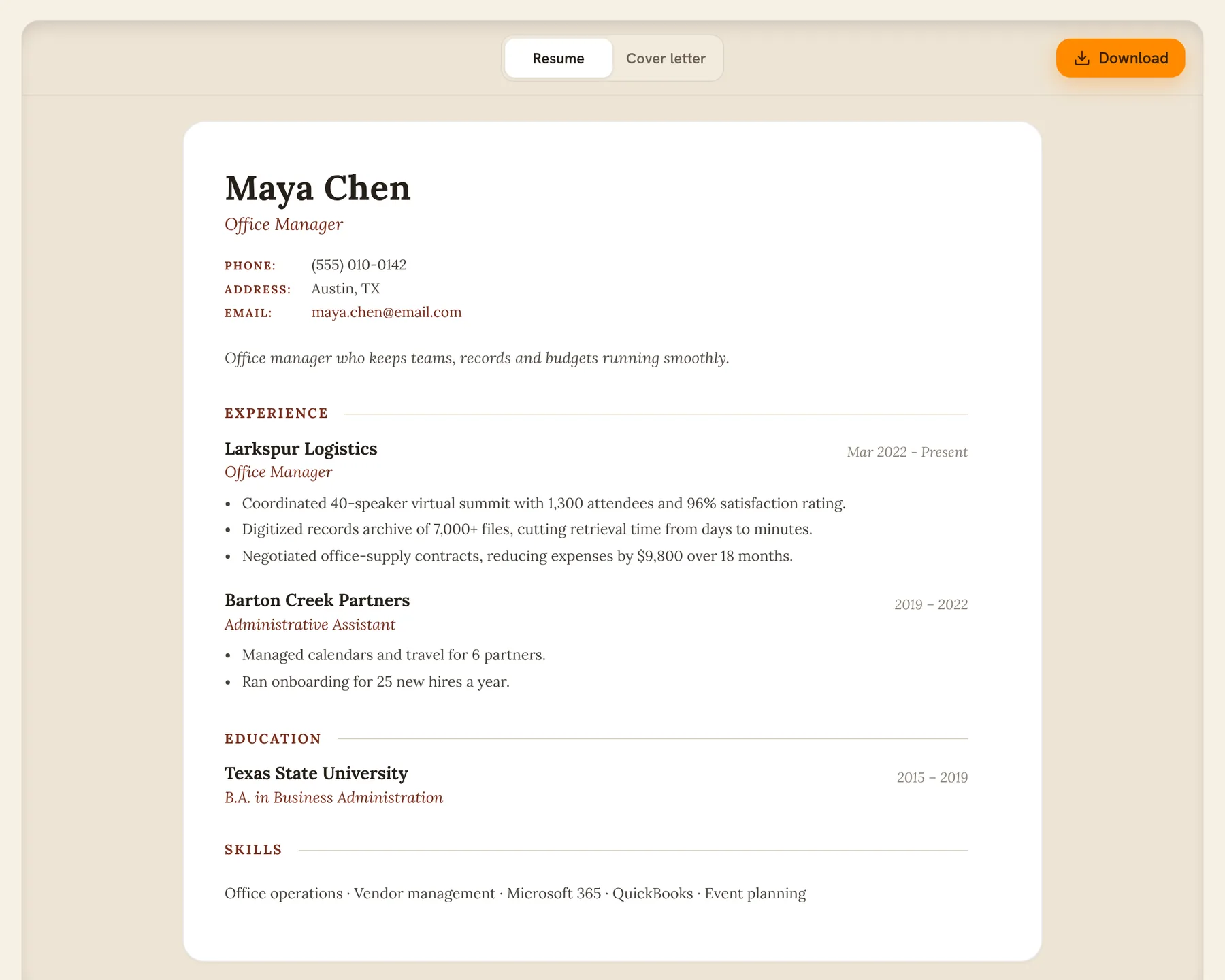
Check your resume for these mistakesUpload it to Resumonk, fix each line in the editor, and download a clean PDF.
Build your resume
5. Should you put your age or marital status on a resume?
Age, date of birth and marital status should be left off a resume for most jobs. You are hired for your skills and what you will add to the organization, and these details say nothing about either.
The same goes for religion, a photo of your family or your health. Contact details, your work and your education are all a resume needs about you personally.
Common questions about resume mistakes
Should keywords never be repeated in a resume?
Keywords can be repeated in a resume when they are true. A main skill can appear in your summary and again in a bullet. What reads badly is the same word in every line, so vary your verbs.
Is one typo on a resume a big deal?
One typo on a resume can cost you a job where accuracy matters, such as editing, finance or law. Elsewhere it may be forgiven, but it is never worth the risk, so proofread before every send.
Should you use the same resume for every job?
Using the same resume for every job is a common mistake. Change your summary and your top bullets for each application, using the words of the job post where they are true.
Should you write "references available upon request"?
"References available upon request" can be left off a resume. Employers assume you will give references when asked, so the line only takes up space.
Is an objective statement ever a good idea?
An objective statement can work when it names the exact job and one thing you bring. A graduate applying for a first job is a common case. A general objective, like the one above, is still a mistake.
Keep reading
- How to Make a Resume
- What is a Resume?
- How to Fix My Resume and Improve It Before a Job Search
- Fresher Resume Guide: How to Write a Resume If You Have No Experience
Next step: start your resume from your LinkedIn profile.

This article was originally published on our blog on Apr 14 2014 and authored by Aditya Babbar. It was edited and republished in its present form by Team Resumonk on Sep 15 2025.